Irene Vallejo Advocates Dialogue as Key to a Healthy Democracy
 Créditos: Archivo UDEM
- After receiving the 2025 Nuevo León Alfonso Reyes Prize, Irene Vallejo, author of the nonfiction essay El infinito en un junco, held a conversation with Humanities students at Universidad de Monterrey.
Spanish writer Irene Vallejo emphasized that democracy is, at its core, an ongoing conversation among citizens, and that its health is compromised when it is disrupted by polarization, hatred, or ideological trenches.
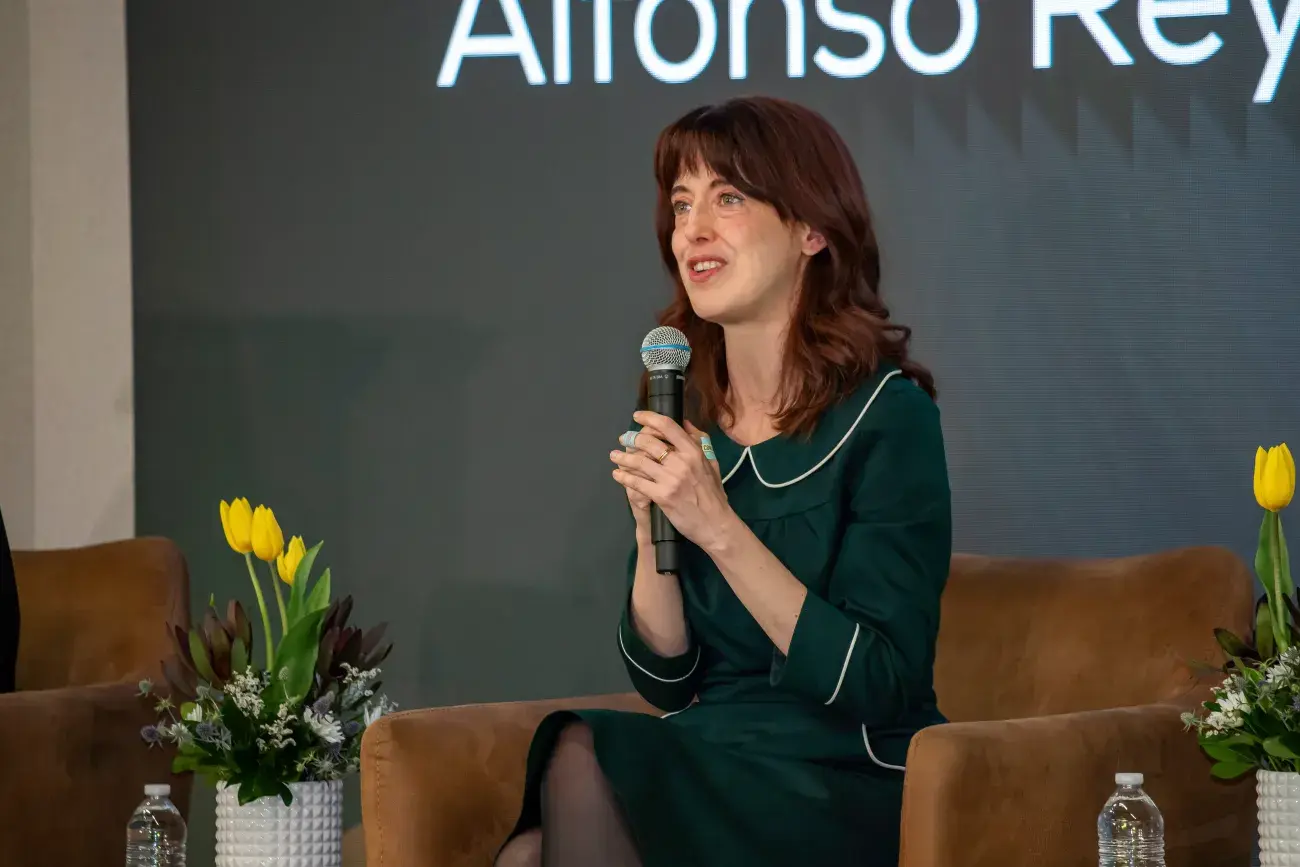
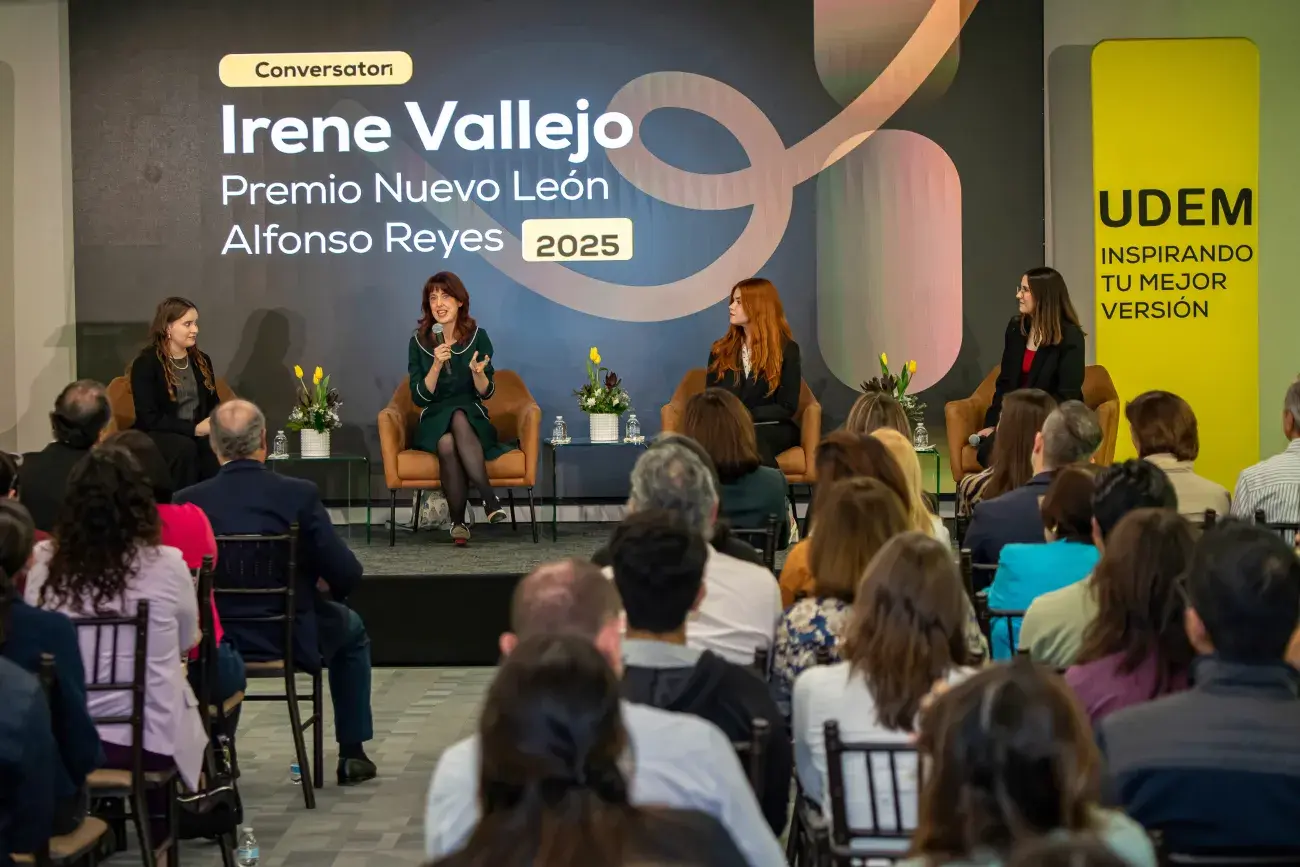
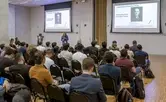
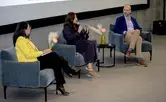
The author of the acclaimed nonfiction essay “El infinito en un junco”, as well as the books “El futuro recordado” and “Alguien habló de nosotros”, met with Humanities students from Universidad de Monterrey on Thursday at noon, in a dialogue held in the Events Hall of the University Community Center.
The gathering offered students an opportunity to engage with the Spanish philologist one day after she received the 2025 Nuevo León Alfonso Reyes Prize in a formal ceremony attended by representatives from the prize’s sponsoring institutions: the Government of the State of Nuevo León, the Secretariat of Culture and CONARTE, UDEM, UANL, ITESM, and U-ERRE.
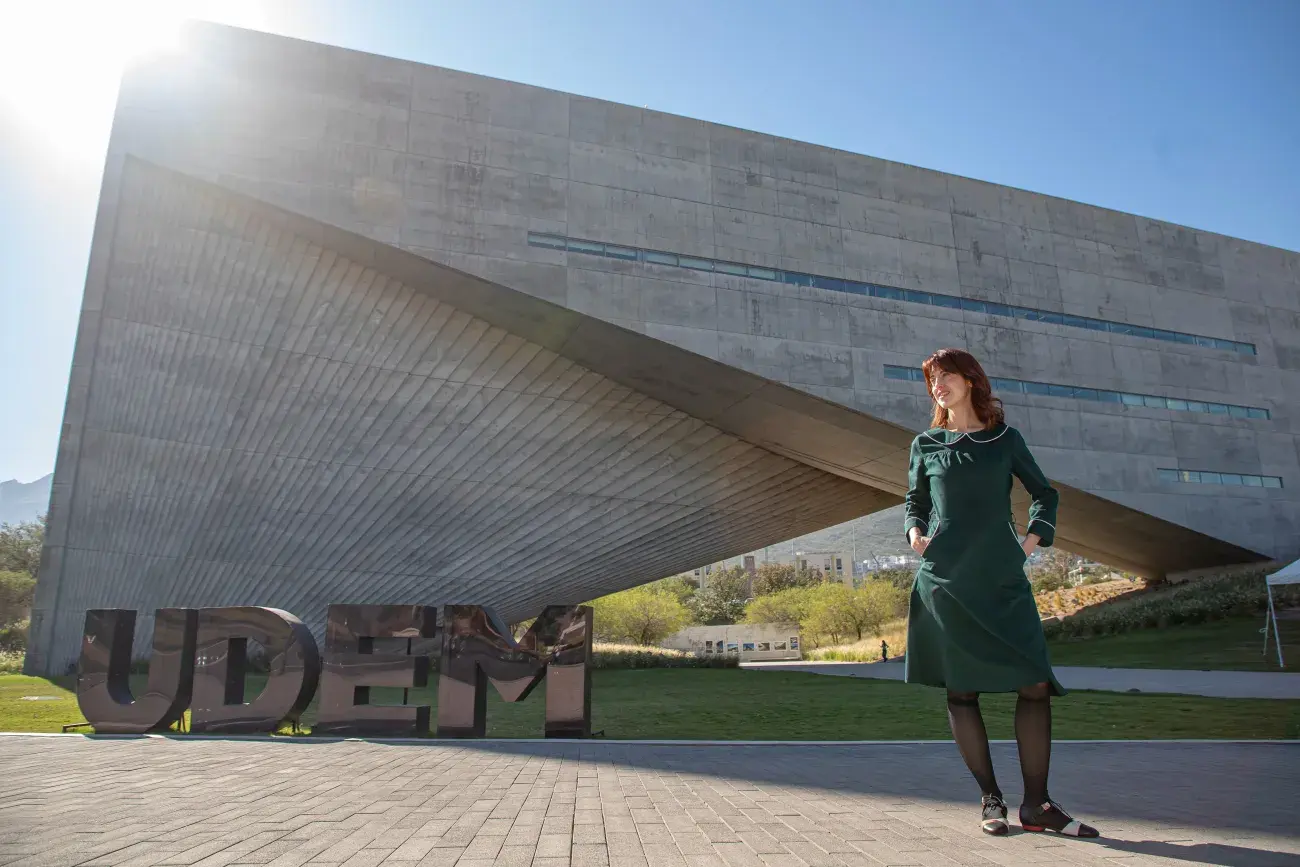
Upon her arrival at the UDEM campus, Vallejo toured several university spaces, beginning with the large-scale sculpture “Teorema lunar” by Manuel Felguérez, continuing through the Roberto Garza Sada Center for Art, Architecture, and Design designed by Japanese architect Tadao Ando, the tiered fountain in the gardens of El Solar, and the mural “El Espejo” by Felguérez on the first floor of the Rectoría building, and concluding at the Vox Veritatis bell, where students celebrate the completion of their university studies.
Various University leaders attended the conversation with the award-winning author, including Rector Mario Páez González; Carlos Basurto Meza, Vice-Rector for Academic Affairs; Luis Iturralde Siller, Vice-Rector for Development; and Nery Gracia, Vice-Rector for Communications and Marketing, along with other UDEM officials.
Vallejo argued that cultivating debate as a core part of education is something society is currently lacking. The ancient Greeks, she noted, were already studying eloquence through rhetoric.
“I believe we are missing that cultivation of debate as an essential part of education, so we can learn to defend our ideas and argue them calmly,” she said.
EXTENDING THE BOOK INTO DIGITAL SPACES IS VALUABLE
When speaking about orality, Vallejo challenged the impulse to pit new tools against old ones, screens versus books. She asserted that expanding pathways toward reading and thought is always beneficial.
“I believe that broadening the spectrum of possibilities and pathways toward reading, toward the spoken word, toward thought is always valuable,” she stated.
Vallejo affirmed that new technologies were not created to replace orality but to complement it. She emphasized that orality remains fundamental, from Socratic dialogue to contemporary debates.
“Socrates already said this: books don’t answer our questions. That’s why it’s so important to meet face to face, to raise our doubts and receive a concrete response to the needs we express,” she noted.
Vallejo also reflected on humanity’s search for guidance, a theme closely tied to the relevance of books. She affirmed that essential ideas and ethical compasses would be lost without a durable record.
“Our best ideas, our greatest discoveries, those ethical and wise compasses, would be lost if we lacked the ability to leave a lasting record of everything we have thought, found, and discovered,” she said.
The philologist recalled the medieval notion of “dwarfs on the shoulders of giants,” explaining that books are those giants, allowing new generations to see further by building on what has already been achieved.
“I believe those giants are books, even if they seem small in size. And “El infinito en un junco” is an essay that seeks to speak precisely about the greatness of what is small and the strength of what appears fragile,” she explained.
She highlighted the classics as privileged interlocutors in an ongoing conversation. In her view, these works help us find essential concepts to shape discourse and imagine the future.
“To be original is to return to the origin—that is, to return to the classics, to the past, to memory. Not to accept it uncritically or reproduce it, but to find in it that fertile and constant dialogue,” she said.
Vallejo, who also received the 2020 National Essay Prize, stressed that returning to origins is the true meaning of originality, a term that etymologically points back to origin. Still, she insisted on the importance of questioning the darker aspects of classical works.
“In that back-and-forth journey, we discover ourselves, understand how we became who we
are, and also learn to question the works and authors that continue to inspire us,” she
added.
Discussing how she connects the ancient world with the contemporary one in her writing, she said her approach is always to find points of communication. She asks herself what is truly important from the past in order to understand the present.
“I’m always attentive to those connecting vessels, and in “El infinito en un junco” every anecdote I tell appears because I believe it explains some facet of who we are, and because I believe it is essential to know and understand them,” she explained.
MEMORY, LANGUAGE, AND THOUGHT: ESSENTIAL FOUNDATIONS
Vallejo lamented the persistent question about the “usefulness” of literature, an inquiry she has encountered her entire life. She defended memory, languages, and thought as indispensable foundations.
“What solid concept of usefulness can we construct that does not include those ingredients, among others? So I am trying to demonstrate that philology, philosophy, and history are essential foundations,” she stated.
She shared that she is an avid reader of poetry, which she considers essential because it teaches us to see and to pay attention. She explained that the verb "to repair" means both to notice and to heal or fix something.
“In “El infinito en un junco”, the goal was precisely to help readers see books not as everyday objects we take for granted, but as the sum of a long journey, of struggles and searchesour witness, our confidant, our companion, our friend,” she said.
Reading poetry, she explained, helps us view books as “the closest thing to a human voice that exists within silence.” As Aristotle said, wonder is the foundation of philosophy, and poetry cultivates that wonder.
“LITERATURE WITH A SIGNATURE BEGINS WITH A WOMAN”
Vallejo shared that early in her writing journey, the prestigious literary models she encountered were almost always men. She said she never imagined becoming a writer because she felt she lacked two “requirements”: “I wasn’t a man, and I wasn’t dead.”
“The impact of The Diary of Anne Frank was enormous, not only for its content and story, but because it made me realize for the first time that a girl, a teenager, could write a book that became a classic,” she said.
Since then, Vallejo has committed herself to working with the past to open pathways for women in the present and to ensure today’s female authors do not become tomorrow’s forgotten voices.
“I set myself that task and began working with the ancient world, where the absence of women is glaring… Only 7% of the figures represented in the textbooks we study are women,” she emphasized.
A pivotal discovery for her was Enheduanna, an Akkadian priestess predating Homer.
“And this woman is the first person to sign a literary text with her own name—not the first woman, the first person. That means literature with a signature begins with a woman,” she underscored.
Finally, reflecting on the human need to create stories, Vallejo mentioned that in her novel “El silbido del arquero”, the god Eros envies humans. To immortal gods, human life is fascinating for its adventure and passion.
The novel’s premise is that humans create stories as a way to achieve permanence and transcendence.
“It is precisely our mortality that leads us to create something that outlives us. Meaning- making, the human search for meaning, is an essential dimension explored by art, creation, and what we call the humanities,” she concluded.
Escribe un comentario